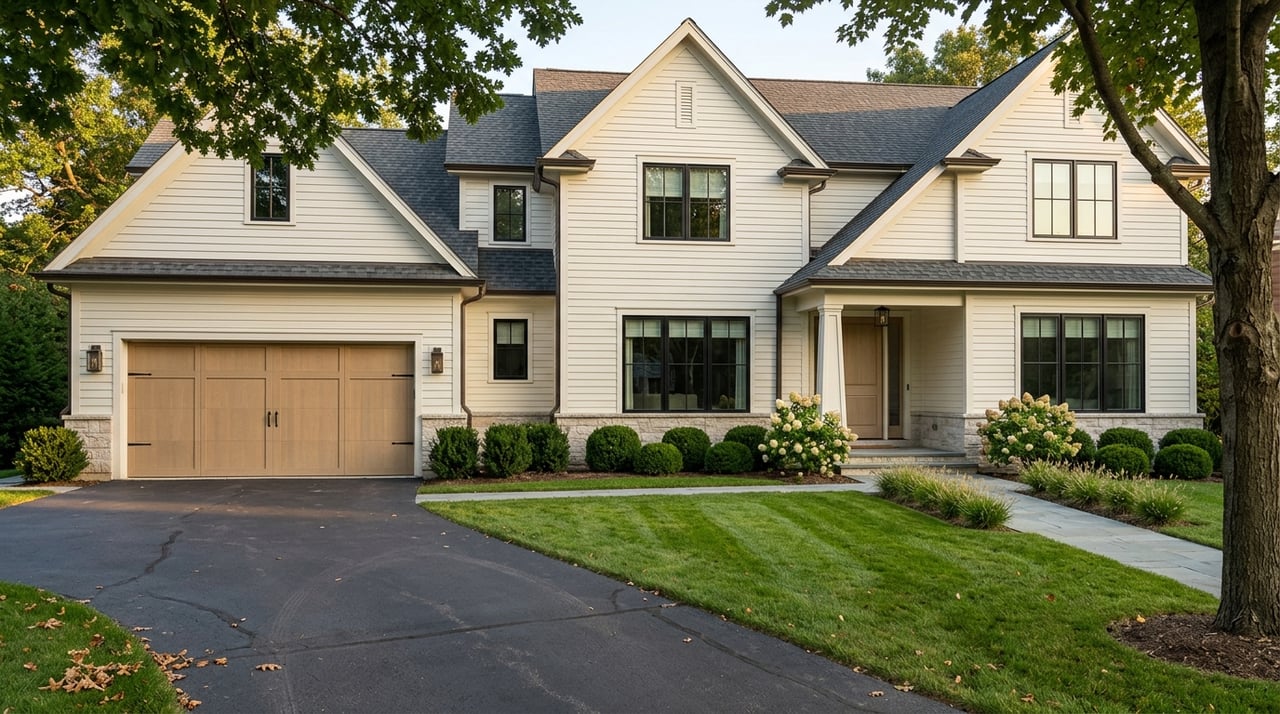
What It’s Like To Live In Essex County Suburbs
April 16, 2026
April 16, 2026
If you are considering a move to Essex County, one question usually comes first: what does daily life actually feel like once you are there? In these suburbs, the answer often comes down to how you want to spend your time, whether that means walking to a village center, catching a train, using a jitney, or staying close to parks and neighborhood amenities. Understanding those patterns can help you narrow your search with more confidence. Let’s dive in.
Many Essex County suburbs share a similar rhythm. Daily life often centers on a downtown or village core, access to commuter rail or shuttle service, and regular use of nearby parks and recreation spaces.
That county-wide pattern is especially noticeable in places like Montclair, South Orange, Maplewood, Glen Ridge, Millburn/Short Hills, and Livingston. According to Essex County Parks, the county park system includes 24 parks and five reservations, which helps explain why outdoor access is such a consistent part of life across the area.
For most buyers, the real lifestyle questions are practical. Can you walk to coffee or dinner? How easy is the commute? Will you need to plan around parking? And are the parks close enough that you will actually use them?
In Essex County, the answers vary by town. Montclair, South Orange, Maplewood, and Glen Ridge tend to feel more walkable around their train stations and village centers, while Millburn/Short Hills and Livingston often involve more driving, shuttle use, or station parking for part of the day.
Open space is one of the defining features of this part of Essex County. South Mountain Reservation alone covers 2,112 acres across Millburn, Maplewood, and West Orange, and it also borders South Orange.
That kind of access shapes how weekends and even weeknights can feel. You are not just choosing a house. You are also choosing how close you want to be to trails, lakes, neighborhood parks, and outdoor routines that make suburban life feel active and flexible.
If you want the strongest mix of downtown energy, transit options, and varied architecture, Montclair often stands out. The township describes its business districts as a regional destination with restaurants, shopping, office, and entertainment uses, and Montclair Center and Upper Montclair reflect that layered, active feel.
Montclair is also one of the most transit-rich options in the area. The township notes that it has seven NJ Transit train stations on the Montclair-Boonton line, which can be a major plus if you want flexibility in your commute.
Architecturally, Montclair has a broad range of historic styles. Its local historic districts include homes and buildings in Queen Anne, Classical Revival, Renaissance Revival, Italianate, and Bungalow-Craftsman styles, which gives many streets a distinctive and established character.
If your ideal suburb includes a traditional downtown and an easy connection between home, shops, transit, and recreation, South Orange and Maplewood are often top of mind. These two communities are among the clearest examples of village-center living in Essex County.
South Orange describes its downtown as home to restaurants, shops, a gourmet grocery, and SOPAC, while also noting that its historic train station offers roughly 30-minute Midtown Direct trips to New York City. That combination can create a daily routine that feels both connected and convenient.
South Orange also ties village life closely to recreation. The village notes that a short walk from downtown can bring you to the River Greenway, village pools and tennis courts, and South Mountain Reservation.
Maplewood offers a similar traditional downtown pattern with its own transportation support. The township provides commuter jitneys to Maplewood Station, and local planning materials describe Maplewood Village as a traditional downtown with a mix of commercial, residential, and public uses surrounded by single-family neighborhoods.
Millburn and Short Hills often appeal to buyers who want a more polished suburban setting with strong amenities and a well-established residential feel. The township highlights restaurants, a movie theater, the Hilton Short Hills, Paper Mill Playhouse, the Cora Hartshorn Arboretum and Bird Sanctuary, and a mix of high-end shopping and traditional downtown retail in its community overview.
From a transportation standpoint, Millburn has two NJ Transit rail stations, and commuter parking is managed carefully. That matters because in towns like this, your day may depend less on walking out the door to the train and more on how smoothly you can plan the trip.
Housing is also more layered than some buyers first expect. Millburn’s master plan notes long-established single-family districts, along with some one- and two-family areas and multifamily pockets, while the Short Hills Park Historic District is described as a planned suburb with winding streets, large lots, and a variety of house styles.
Livingston tends to feel more spread out than the downtown-centered towns nearby. If you are looking for a more traditional suburban layout with a strong emphasis on residential areas, parks, and everyday driving convenience, Livingston may feel like a natural fit.
The township operates an Express Shuttle between Livingston Mall and South Orange Train Station, which helps connect residents to rail service. The township also emphasizes parks and athletic fields, reinforcing a recreation-focused lifestyle.
According to Livingston’s housing element, land use is made up mainly of single-family residential uses, while also including townhouse and multifamily developments. In practical terms, that often means a less village-centered routine and more of a classic suburban day-to-day pattern.
Glen Ridge and Verona can be appealing if you want a smaller-scale environment with strong park access and established housing character. They are different from each other, but both lean into a quieter suburban experience.
Glen Ridge emphasizes recreation and architecture. The borough says its system includes nine parks, a community pool, and a community center at the train station, and weekday jitney service runs to the Ridgewood Avenue Train Station.
The borough also highlights Queen Anne, shingle style, and American Georgian homes, which contributes to a distinctive visual identity. If you value older architecture and a more contained town feel, Glen Ridge may stand out.
Verona adds another park-centered option. Verona Park is a 54.32-acre county park built around a lake, with boating and fishing, and the town’s parking and senior bus services suggest a practical, car-friendly routine.
One of the biggest reasons Essex County suburbs attract so much interest is that they do not feel uniform. Across the area, many communities are shaped by older housing stock and established neighborhood patterns rather than one single suburban template.
Montclair’s historic districts include late-19th- and early-20th-century buildings in a wide range of styles. South Orange highlights Tudor, Colonial, and Victorian homes, while Glen Ridge points to Queen Anne, shingle, and Georgian examples. Millburn and Short Hills combine planned historic areas with long-established residential neighborhoods and some multifamily sections.
That means your home search is not just about price point or square footage. It is also about deciding whether you want the energy of a busier downtown setting, the calm of a quieter residential layout, or a balance of both.
The best fit usually comes down to your routine. If you want multiple business districts, more restaurant activity, and a more urban edge, Montclair may be worth a closer look.
If village-center living and train-oriented convenience matter most, South Orange and Maplewood often rise to the top. If you prefer a more controlled, polished, and park-oriented environment, Millburn and Short Hills may feel more aligned.
If your priority is a traditional suburban pattern with more driving and a residential focus, Livingston may make sense. And if you want something smaller-scale, quieter, and rich in architectural character, Glen Ridge or Verona may be a better fit.
Choosing between these towns is easier when you compare not just homes, but also the rhythm of daily life. If you are thinking about your next move in Essex County, Eliane Longhi can help you evaluate which suburb best matches your commute, lifestyle, and long-term goals.
Stay up to date on the latest real estate trends.
We approach every move with strategy first. Let’s discuss yours and position you ahead of the market.
STATE New Jersey | New York | Florida | Pennsylvania